
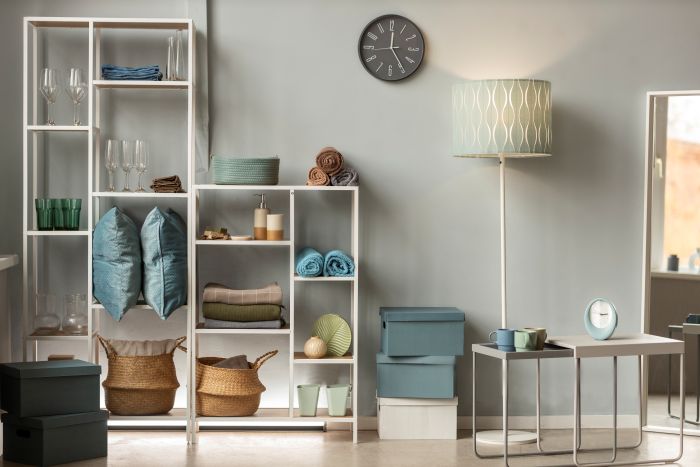
For years, minimalism dominated interior spaces. Clean lines, concealed storage, and uninterrupted surfaces defined the aesthetic of modern living. Recently, however, a shift has begun to emerge. Designers and homeowners alike are rediscovering the value of visible storage, not as clutter, but as curated expression.
Open shelving had its moment, but it often demanded constant upkeep and careful arrangement. A new balance has appeared, blending transparency with protection. Glass- fronted storage solutions allow everyday objects to become part of the design language while maintaining a sense of order and refinement.
In contemporary interiors, storage is no longer just practical; it’s an essential element. It has become an extension of personal storytelling, revealing collections, heirlooms, and carefully chosen décor in a way that feels intentional rather than accidental.
When Storage Becomes a Visual Anchor
The most compelling interiors often contain a focal point that quietly anchors the space. While artwork and statement furniture frequently play this role, structured storage can achieve the same effect when thoughtfully designed.
Glass-fronted cabinetry introduces visual depth to a room. Light interacts with the transparent surfaces, subtly reflecting and refracting throughout the space. Instead of bulky furniture that blocks sightlines, transparent storage maintains openness while still offering structure.
This approach works particularly well in living rooms, dining areas, and home offices where display and organization intersect. Books, ceramics, vintage glassware, and travel artifacts gain presence without overwhelming the environment.
The key lies in curation. When items are arranged with intention, the cabinet becomes less about storage and more about composition. Negative space, varied heights, and restrained color palettes help transform everyday objects into design elements.
The Balance Between Exposure and Protection
Unlike open shelving, glass-fronted cabinets solve a practical challenge that many homeowners encounter. Dust accumulation and accidental damage often make fully exposed displays difficult to maintain over time.
Glass inserts serve as a barrier without obscuring the contents. This creates a controlled display environment where objects remain visible but protected. It is particularly beneficial for delicate materials such as ceramics, antique books, or collectible pieces that benefit from enclosure.
In modern homes, the display cabinet with glass doors has emerged as a hybrid solution that bridges decorative presentation and functional storage. It offers transparency without the vulnerability associated with open shelving, creating a practical compromise between visibility and preservation.
This combination makes it especially appealing in urban spaces where storage must serve multiple purposes.
Materials That Shape the Experience
The design impact of glass cabinetry depends heavily on the type of glass used. While clear glass remains the most common choice, several variations subtly change how objects are perceived.
Frosted or textured glass introduces privacy while still allowing light to pass through. This option softens the appearance of stored items and can make densely arranged collections feel less busy.
Ribbed or fluted glass has become increasingly popular in contemporary interiors. The vertical texture diffuses the view of objects inside while creating an elegant visual rhythm across cabinet surfaces.
Seeded glass offers a more artisanal appearance, often associated with handcrafted or vintage-inspired interiors. Tiny bubbles within the glass add character and depth, making the cabinet feel less industrial and more personal.
These variations allow designers to tailor transparency levels to the space and the objects being displayed.
Curated Storage as a Lifestyle Statement
The rise of curated storage reflects broader lifestyle changes. As people spend more time at home, interior spaces are evolving into environments that reflect identity and creativity.
Instead of hiding possessions behind solid doors, homeowners are becoming more intentional about what they choose to display. Cookbooks, sculptural ceramics, framed photographs, and design objects all contribute to a narrative about the people who inhabit the space.
Glass-fronted cabinets support this shift by encouraging thoughtful editing. When everything is visible, unnecessary items tend to disappear. What remains is a refined selection that reflects personal taste rather than accumulation.
This philosophy aligns closely with modern approaches to mindful living. Ownership becomes less about quantity and more about appreciation.
Lighting That Elevates the Display
One often overlooked aspect of glass cabinetry is lighting. When integrated correctly, lighting transforms the cabinet from a storage unit into a subtle architectural feature.
Soft LED strips or concealed spotlights can highlight textures, colors, and shapes inside the cabinet. Light passing through glass shelves can create layered illumination that spreads gently throughout the room.
The result is a warm ambient effect rather than a harsh spotlight. In evening settings, illuminated displays add atmosphere while maintaining functionality.
Designers frequently use this technique in dining rooms and living areas where the cabinet doubles as both storage and mood lighting.
A Design Element That Evolves Over Time
Unlike fixed décor pieces, glass-fronted cabinets evolve alongside the homeowner. Collections change, seasonal items rotate, and new objects gradually replace older ones.
This flexibility makes the cabinet a living feature within the home. It adapts to shifting interests, travel experiences, and personal milestones without requiring structural changes to the space.
Over time, the cabinet becomes a visual timeline of memories and influences.
In a design landscape that often prioritizes simplicity and permanence, this adaptability stands out. It reminds us that interiors need not remain static. Instead, they can quietly evolve, reflecting the lives unfolding within them.
Through thoughtful arrangement and subtle transparency, storage becomes more than mere function.